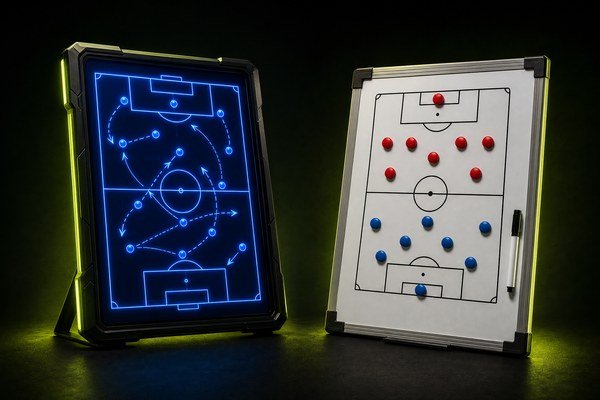
In the dynamic world of sports coaching, the tools used to strategize and communicate can significantly impact team performance. While traditional tactics boards have been a staple for decades, the advent of digital solutions has introduced a new paradigm. The global smart sports equipment market, valued at USD 3.4 billion in 2025, is projected to reach USD 8.0 billion by 2033, indicating a clear trend towards technological integration in sports [1]. This shift presents a critical question for professional clubs and academies: which approach—digital or traditional—offers the superior advantage? From the perspective of TacticGround, a leading B2B tactical board manufacturer exporting to Europe, North America, and Latin America, understanding the nuances of both is paramount for making informed procurement decisions.
1. The Enduring Legacy of Traditional Tactics Boards
Traditional tactics boards, with their familiar dry-erase surfaces and magnetic pieces, have long been the bedrock of strategic planning in sports. Their continued relevance stems from a combination of tangible benefits and inherent simplicity that resonates with many coaches.
1.1. Physicality and Tangibility: The Unmatched Feel
The tactile experience of moving physical pieces and drawing directly onto a board offers a unique advantage. This hands-on interaction can foster a deeper connection with the strategy, allowing coaches and players to physically manipulate formations and visualize movements in a concrete way. For many, the act of physically placing a magnet or drawing a line reinforces the tactical concept more effectively than a purely digital interaction. This tangibility can be particularly beneficial in high-pressure situations, providing a stable and familiar medium for rapid adjustments.
1.2. Durability and Simplicity: Built to Last
High-quality traditional tactics boards are renowned for their durability. Constructed from robust materials such as reinforced aluminum frames and resilient dry-erase surfaces, they are designed to withstand the rigors of daily use in various environments, from locker rooms to outdoor training pitches [4]. Their operational simplicity means no reliance on power sources, internet connectivity, or software updates, making them consistently reliable. While surfaces can degrade over time with improper care, premium coatings ensure longevity, often guaranteed for years [9].
1.3. Common Materials and Specifications
Traditional tactics boards come in various forms, each tailored to specific needs. Common materials include high-grade aluminum for frames, providing a balance of strength and portability. The board surfaces are typically made from steel sheets coated with a durable dry-erase laminate, allowing for repeated writing and erasing without ghosting. Magnetic pieces, often 1/4-inch thick, ensure strong adhesion even in windy conditions [4].
Dimensions vary widely, from compact handheld boards to large, foldable tables. For instance, SCOPRO offers a 24″ x 20″ board, while FORZA provides a 43″ x 24″ foldable table, and Select features a 45 x 30 cm aluminum board [4] [5] [6]. These variations cater to different coaching styles and team sizes, emphasizing the importance of selecting a board that aligns with specific operational requirements. Magnetic strength, often measured in gauss, is a critical specification for ensuring pieces remain firmly in place during dynamic coaching sessions.
2. The Rise of Digital Tactics Boards
The digital revolution has profoundly impacted sports, and tactical analysis is no exception. Modern coaching increasingly leverages technology to enhance strategy communication, player understanding, and performance analysis [2].
2.1. Technological Advancements in Coaching
The integration of technology into sports coaching has led to the development of sophisticated digital tactics boards. These platforms move beyond static diagrams, offering dynamic, interactive environments for strategic planning. The online sports coaching platforms market is projected to grow by USD 1.86 billion, with a CAGR of 16% from 2025 to 2030, underscoring the rapid adoption of digital solutions [3]. This growth is driven by the demand for tools that can process and interpret vast amounts of data, providing insights previously unattainable.
2.2. Dynamic Visualization and Real-time Adjustments
Digital tactics boards offer unparalleled capabilities for dynamic visualization. Coaches can create animated plays, simulate player movements in 3D, and integrate real-time data such as heat maps and algorithmic predictions [2]. This allows for a more immersive and comprehensive understanding of tactical concepts. The ability to adjust formations and strategies in real-time, and even send instructions directly to players’ wearable devices, provides a level of flexibility and responsiveness that traditional boards cannot match [2]. This dynamic nature is crucial for adapting to fluid game situations and optimizing strategic decision-making.
2.3. Integration with Modern Coaching Ecosystems
One of the most significant advantages of digital tactics boards is their seamless integration with broader coaching ecosystems. These platforms can connect with player tracking systems, performance analytics software, and communication tools, creating a holistic environment for team management. This interconnectedness facilitates data-driven coaching methodologies, allowing coaches to analyze advanced metrics like distance covered by zones, transition speed, and pressing effectiveness [2]. Such integration streamlines workflows, enhances collaboration among coaching staff, and provides a comprehensive view of individual and team performance.
3. Comparative Analysis: Digital vs. Traditional
Choosing between digital and traditional tactics boards requires a thorough comparative analysis, weighing their respective strengths and weaknesses against specific operational needs and procurement considerations.
3.1. Key Feature Comparison
| Feature | Traditional Tactics Board | Digital Tactics Board |
|---|---|---|
| Portability | Varies (folding, roll-up options available) | Highly portable (tablet, laptop, smartphone applications) |
| Durability | Physical wear & tear, surface degradation over time | Software updates, hardware obsolescence, battery life |
| Interactivity | Manual piece movement, drawing with markers | Drag-and-drop, animation, real-time feedback, touch input |
| Data Integration | None; relies on manual data transfer | Real-time analytics, player tracking data, historical data |
| Cost | Lower initial cost, ongoing cost for markers/magnets | Higher initial cost (hardware/software), subscription fees |
| Customization | Limited (team branding, field layouts, player numbers) | Extensive (templates, custom plays, branding, player profiles) |
| Collaboration | Primarily in-person discussions | Remote, cloud-based sharing, multi-user editing, instant feedback |
| Environmental Factors | Weather-resistant (some models), no power required | Screen glare, battery life dependency, internet connectivity issues |
3.2. Practical Application Scenarios
Traditional boards excel in environments where quick, on-the-spot visual communication is needed without technological dependencies. They are ideal for sideline adjustments during a match, impromptu discussions in the locker room, or when coaching in areas with limited connectivity. Their simplicity makes them accessible to all, regardless of tech proficiency.
Digital boards, conversely, shine in detailed pre-match analysis, post-match reviews, and long-term player development. Their ability to store, recall, and animate plays makes them invaluable for complex tactical instruction and scenario planning. For remote coaching or multi-coach collaboration, digital platforms offer seamless sharing and real-time editing capabilities, transcending geographical barriers.
3.3. Cost-Benefit Analysis for B2B Buyers
For B2B buyers, the cost-benefit analysis extends beyond the initial purchase price. Traditional boards represent a lower upfront investment and minimal ongoing costs, primarily for replacement markers and magnets. Their longevity, especially for high-quality models, offers a strong return on investment through years of reliable service.
Digital boards, while having a higher initial outlay for hardware (tablets, interactive displays) and software licenses, offer benefits that can justify the expense. The efficiency gained through advanced analytics, reduced preparation time, and enhanced player understanding can translate into improved team performance and, ultimately, competitive advantage. Furthermore, the ability to integrate with existing IT infrastructure and scale with team growth adds significant long-term value.
4. Addressing Common Coaching Pain Points
Both digital and traditional tactics boards aim to alleviate common pain points experienced by coaches, albeit through different mechanisms.
4.1. Communication Clarity and Player Engagement
One of the primary challenges for coaches is effectively communicating complex strategies to players. Traditional boards provide a clear, visual representation that can be easily understood by all. The physical act of moving pieces and drawing lines can make abstract concepts more concrete, enhancing player engagement during tactical briefings. Digital boards elevate this by offering animated sequences, 3D simulations, and interactive elements that can captivate players and provide a deeper understanding of movement patterns and spatial awareness. The ability to replay scenarios and visualize different outcomes can significantly improve comprehension.
4.2. Adaptability and Strategic Flexibility
Coaching often requires rapid adjustments to strategy based on game flow or opponent tactics. Traditional boards allow for quick, manual changes, making them highly adaptable in real-time situations. However, digital boards offer a more sophisticated level of flexibility. Coaches can instantly modify formations, draw new plays, and even run simulations to predict outcomes, all within seconds. This agility is crucial for maintaining a competitive edge and responding effectively to unforeseen circumstances during a match. The ability to save and recall countless tactical variations also provides a vast library of strategies for different opponents and scenarios.
4.3. Data-Driven Decision Making
The modern era of sports emphasizes data-driven decision-making. While traditional boards are excellent for conceptualizing strategies, they lack the capacity for direct data integration. Coaches using traditional boards must manually translate data from other sources onto the board. Digital boards, however, seamlessly integrate with performance data, allowing coaches to visualize player metrics, analyze trends, and make informed decisions based on empirical evidence [2]. This capability transforms tactical planning from an intuitive art into a precise science, enabling coaches to identify patterns invisible to the human eye and optimize strategies with greater precision [2] [7].
5. TacticGround’s Role in the Evolving Landscape
As a dedicated B2B manufacturer, TacticGround understands the diverse needs of professional sports organizations. Our commitment lies in providing high-quality solutions that cater to both the enduring appeal of traditional methods and the growing demand for advanced digital integration.
5.1. Manufacturing Excellence and Material Science
TacticGround prides itself on manufacturing excellence, utilizing advanced material science to produce tactics boards that meet the highest standards of durability and functionality. Our traditional boards feature robust, lightweight frames, often made from aerospace-grade aluminum, and proprietary dry-erase surfaces engineered for superior longevity and resistance to ghosting. We rigorously test our magnetic components to ensure optimal strength and reliability, guaranteeing that every piece stays precisely where it’s placed, even during intense coaching sessions. This meticulous attention to detail ensures that our products are not just tools, but reliable partners for coaches worldwide.
5.2. Customization and B2B Solutions
Recognizing that every club and academy has unique requirements, TacticGround offers extensive customization options for B2B clients. From incorporating specific team logos and branding onto board surfaces to developing bespoke field layouts for different sports, our manufacturing capabilities are designed to meet diverse needs. We work closely with procurement specialists to understand their exact specifications, offering tailored solutions that enhance team identity and operational efficiency. Our B2B services include flexible Minimum Order Quantities (MOQ) and efficient lead times, ensuring that clubs can equip their coaching staff without unnecessary delays.
5.3. Supporting Both Traditional and Hybrid Approaches
TacticGround believes in empowering coaches with choices. While we specialize in premium traditional tactics boards, we also recognize the value of digital advancements. Our products are designed to complement digital coaching tools, providing a robust physical foundation for strategic discussions that can then be seamlessly translated into digital platforms. We support a hybrid approach, where the tangible benefits of traditional boards are combined with the analytical power and flexibility of digital solutions, offering a comprehensive toolkit for modern coaching.
6. Making the Informed Choice: A Procurement Perspective
For procurement specialists in professional sports organizations, the decision between digital and traditional tactics boards is a strategic one, impacting budget, operational efficiency, and long-term coaching effectiveness.
6.1. Assessing Team Needs and Budget
The first step is a thorough assessment of the team’s specific needs and available budget. For grassroots clubs or those with limited resources, high-quality traditional boards offer an economical yet effective solution. For elite academies and professional teams with larger budgets and a strong emphasis on data analytics, investing in digital platforms and complementary hardware may be more appropriate. Consider the primary use cases: Is it for quick, on-field adjustments, or in-depth, data-rich analysis in a dedicated analytics room? The answer will guide the selection process.
6.2. Considering Scalability and Future-Proofing
Scalability is a crucial factor for growing organizations. Digital solutions often offer greater scalability, allowing for easy expansion of user licenses, integration of new data sources, and adaptation to evolving technological standards. Traditional boards, while inherently less scalable in terms of features, can be scaled by simply acquiring more units. Future-proofing involves considering the long-term technological roadmap of the organization. A hybrid approach, combining durable traditional boards with adaptable digital software, can offer the best of both worlds, ensuring current needs are met while allowing for future technological integration.
6.3. B2B Procurement: MOQ, Lead Time, and Support
When procuring tactics boards in bulk, B2B considerations are paramount. TacticGround understands the importance of competitive Minimum Order Quantities (MOQ) that align with organizational purchasing cycles. Our streamlined manufacturing processes ensure reliable lead times, from order placement to delivery, minimizing disruption to coaching schedules. Furthermore, comprehensive after-sales support, including warranty, maintenance, and access to replacement parts, is a key differentiator. We offer dedicated account management to ensure a smooth procurement process and long-term satisfaction for our B2B partners.
FAQ Section
Q1: Are digital tactics boards suitable for all sports?
Yes, digital tactics boards are highly versatile and can be adapted for almost any sport, including football, basketball, hockey, and even individual sports. Their customizable templates and ability to simulate various field or court layouts make them universally applicable.
Q2: How durable are traditional tactics boards from a B2B perspective?
High-quality traditional tactics boards, especially those manufactured for B2B markets like TacticGround’s, are built for exceptional durability. They typically feature robust frames (e.g., aluminum) and specialized dry-erase surfaces designed to withstand heavy use, resist scratching, and prevent ghosting over many years. Proper care and storage further extend their lifespan.
Q3: Can digital tactics boards be used offline?
Many digital tactics board applications offer offline functionality, allowing coaches to prepare strategies and review plays without an internet connection. However, features requiring real-time data integration, cloud synchronization, or multi-user collaboration will necessitate online access.
Q4: What customization options are available for bulk orders?
For bulk B2B orders, customization options are extensive. TacticGround offers personalized branding (team logos, colors), custom field layouts for specific sports or training drills, and tailored sizing. We also provide options for specialized magnetic pieces or markers to meet unique coaching requirements.
Q5: What is the typical lifespan of a high-quality traditional tactics board?
A well-maintained, high-quality traditional tactics board can last for 10-15 years or even longer. Factors influencing lifespan include the quality of materials (e.g., glass surfaces offer superior durability [9]), frequency of use, and adherence to cleaning and storage guidelines. TacticGround boards are designed for maximum longevity.
Q6: How do digital boards enhance player understanding compared to traditional ones?
Digital boards enhance player understanding through dynamic visualizations, animated play sequences, and 3D simulations. They allow coaches to demonstrate movement patterns, passing lanes, and defensive structures with greater clarity and realism, making complex tactical concepts more intuitive and engaging for players [2].
Conclusion
The debate between digital and traditional tactics boards is not about one being inherently superior to the other, but rather about identifying the optimal tool for specific coaching contexts. Traditional boards offer unmatched tangibility, reliability, and simplicity, making them indispensable for immediate, hands-on tactical communication. Digital boards, conversely, provide advanced analytical capabilities, dynamic visualization, and seamless integration with modern coaching ecosystems, driving data-driven decision-making and remote collaboration. The most effective approach often involves a strategic blend of both, leveraging the strengths of each to create a comprehensive and adaptable coaching toolkit.
Ultimately, the ‘better’ choice is the one that best aligns with your team’s philosophy, budget, and operational demands. TacticGround is committed to supporting professional sports organizations in making this informed decision. Whether you require robust, customizable traditional boards or seek to integrate physical tools with digital workflows, our expertise and manufacturing capabilities are at your service.
For tailored solutions that elevate your team’s strategic planning, contact TacticGround today. Our team of experts is ready to discuss your specific needs and provide high-quality, B2B-focused tactical board solutions.
Contact us at info@tacticground.com to explore how we can empower your coaching staff.
References
[1] Grand View Research. (2026). Smart Sports Equipment Market Size Report, 2026-2033. https://www.grandviewresearch.com/industry-analysis/smart-sports-equipment-market
[2] FSI Training. (2026). The Revolution in Football Tactical Analysis in 2026 | The Complete Guide. https://fsi.training/en/blogs/football-tactical-analysis-2026
[3] Technavio. (n.d.). Sports Coaching Market Analysis, Size, and Forecast 2026-2030. https://www.technavio.com/report/online-sports-coaching-platforms-market-industry-analysis?amp
[4] SCOPRO Products. (2023). The Essential Role Of Tactical Boards In Soccer Coaching. https://scoprosoccer.com/blogs/tactical-board/the-essential-role-of-tactical-boards-in-soccer-coaching?srsltid=AfmBOoo0U5pMy7HuRhPpRnbI04onM8Ss6oMR72wLHIToZ6UjEivIGJE5
[5] FORZA. (n.d.). FORZA Soccer Tactics Table – Foldable & Portable [43in x 24in]. https://www.forza.com/us/coaching-board-table?srsltid=AfmBOopEE84o0g7l4374e6Se7DvacNuuGwHyK-BemGxaUXHzPf8cdrn3
[6] Sportyfied. (n.d.). Select Tactics Board Alu Football, White. https://www.sportyfied.com/us/select-tactics-board-alu-football-white?srsltid=AfmBOooklpticLbtgTLnEAxNqa4HLLnC1psqDhJZ8mbV_ESv0lOLT7mq
[7] Sportsilab. (2026). Best Practices and Challenges in Collecting Data …. https://www.sportsilab.com/market-trends/tacticalathleteboard
[8] The Sport Journal. (n.d.). The Evolving Role of Technology and Analytics in Coaching. https://thesportjournal.org/article/the-evolving-role-of-technology-and-analytics-in-coaching-transforming-practices-and-enhancing-the-impact-on-the-profession/
[9] Reddit. (n.d.). Coating or painting over vinyl Whiteboard : r/teaching. https://www.reddit.com/r/teaching/comments/1e8q9kt/coating_or_painting_over_vinyl-whiteboard/
发表回复